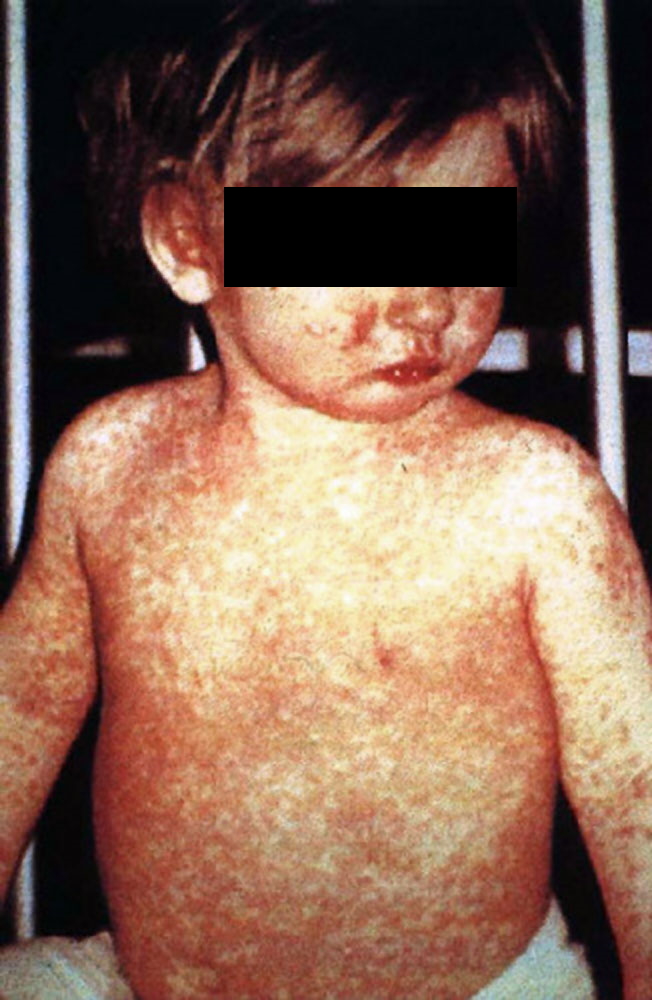
Measles infections weaken your immune system and increase your risk of other diseases. Vaccines prevent this

Two of the most persistent anti-vaccine tropes are that unvaccinated children are healthier than vaccinated children and that “natural” immunity is better than “artificial” immunity. There has never been any evidence to support these claims, and plenty of evidence that they are wrong (Schmitz et al. 2011; Grabenhenrich et al. 2014), but two recent studies have shed new light on just how wrong they are. These studies built on previous work and showed that infection with the measles virus actually destroys memory cells, resulting in “immune amnesia” for years to come. In other words, becoming infected with measles makes you far more likely to be infected with other diseases for several years after the original measles infection. It actually weakens your immune system, rather than building it.

Before I can talk about these studies and their implications, I need to briefly explain how the immune system and vaccines work. I have done so in more detail here, so I’ll be brief. When a pathogen first enters your body, it is attacked by the innate immune system, which provides a non-specific response. In other words, it does not have specific cells for fighting specific pathogens. While this is happening, however, your adaptive (aka acquired) immune system goes into action. This immune system is more specific and generates T and B cells (specialized immune cells) that are specific for targeting a particular pathogen. This is a very powerful arm of your body’s immune defenses and is vital for fighting things like measles infections. It takes time, however, for your body to learn to recognize a new pathogen and build appropriate cells and subsequent antibodies to respond to it. While this is happening, the pathogen multiplies, and you become sick.

After the infection (assuming you survived). Your body maintains memory T and B cells for that pathogen so that it can respond quickly in the future. Your body also retains antibodies from the initial infection which can respond immediately to future infections by that pathogen. This is how natural immunity works.

Vaccines activate the same system, but do so by presenting your body with the antigens (proteins your body uses to recognize pathogens) for the pathogen in question (or a dead or weakened version of the pathogen) rather than giving you the live, healthy pathogen. This causes your body to go through the same cycle of producing B and T cells and releasing antibodies that it would go through for a real infection, but there is one critical difference: you don’t get the disease. This is the fundamental reason why it is absurd to argue that natural immunity is better than artificial immunity. To get natural immunity, you first have to get the disease! It is literally arguing that it is better to get the disease so that you don’t get it again rather than just never getting it in the first place!

But what about the claim that getting a disease helps build the immune system? As you can hopefully now see, it only “builds” the immune system in that it teaches the body how to respond to one particular pathogen, which is exactly what vaccines do without ever making you sick. There is, however, another catch here, which is where the new studies come in. As it turns out, while measles infections are “building” the immune system by teaching it how to respond to the measles virus, they are also destroying memory cells and greatly weakening the immune system. You see, immunity can be lost. This is true for both natural immunity from infections and artificial immunity from vaccines (though the latter can be easily remedied with boosters). Over time, memory B cells and T cells die, and the number of antibodies circulating in your body for a particular pathogen diminish. This can eventually lead to a loss of immunity. This also means that, in concept, a pathogen could destroy existing immune cells and make you vulnerable to diseases that you were previously protected against. We now know that this is exactly what the measles virus does.

We’ve known for a long time that measles virus infections have a suppressive effect on the immune system, andt5hat suppression is partially why secondary infections are so common for measles patients. This knowledge goes back at least as far as 1908 (Pirquet 1908) and has been corroborated by more recent research (Griffin 2010; de Vries et al. 2012), but what we didn’t realize was just how severe this suppression was or how long it lasted for. Several studies on mice found that viral infections could actually take out previously existing memory cells and, presumably, put the mice at risk for future infections (Selin 1996; Kim and Welsh. 2004), but, as regular readers of this blog know, animal studies are useful starting points, but they only go so far, and we really need studies on humans to get a clear picture of the situation.

Compelling epidemiological evidence of measles having a lasting impact on human immune systems arrived in 2015, when researchers found that measles infections increased mortalities from other infections for 2–3 years after the measles infection (Mina et al. 2015)! This result was corroborated by a large cohort study (one of the most powerful study designs) that found increased infection rates for diseases (other than measles) for five years following infection with measles (Gadroen et al. 2018). These studies provided really good evidence that measles did something harmful to the immune system, but we still weren’t quite sure what it was doing.

This brings us finally to the two recent studies: Petrva et al. (2019) and Mina et al. (2019). Both of these studies took blood samples from children before and after natural infection with the measles virus, and Petrva et al. looked at the effect on B cells, while Mina et al. looked at the effect on circulating antibodies. They both found the same thing: the measles virus reduced the diversity of the immune system (B cells or antibodies) thus putting patients at risk for other diseases. In other words, the virus destroys the components of your immune system that had previously learned to respond to other diseases. Thus, the natural immunity you had to those diseases is gone (or at least greatly diminished) and you are susceptible to them again. Further, this impact was not small. Mina et al found that severe measles infections caused children to lose 11–62% (median = 40%) of their existing antibody repertoire! That’s a huge loss.

Now, you may be wondering what affect the vaccine has. Does it suppress the immune system like an actual infection does? Mina et al. (2019) looked at this as well, and no, it doesn’t. All that it does is make children immune to measles. That’s it. This makes good sense if you understand what is going on here. The measles virus actually infects cells (including memory B and T cells), which is why it can do so much damage to you and your immune system. Vaccines don’t do that. They can’t infect anything because the either don’t contain the pathogen at all, or contain a dead or weakened version of it that can’t infect you. Thus, all that they do is teach your immune system how to respond to a pathogen without any of the damaging effects of actually becoming infected with the pathogen.

Before concluding this post, I also want to point out that another common anti-vaccine myth is that natural immunity is lifelong, whereas artificial immunity is temporary. The papers discussed in the post very clearly show that natural immunity can also be temporary and acquiring natural immunity for one disease can actually cost you previous immunity to others. Further, vaccine-induced immunity often lasts just as long as natural immunity (Jokinen et al. 2007), and even in cases where natural immunity does last longer, it is often not life-long (Wendelboe et al. 2005), and, again, the vaccine prevents you from ever getting the disease in the first place (and their protection can be extended with boosters).

Conclusion

In short, the notion that unvaccinated children are healthier than vaccinated children is not only wrong, it is backwards. Recent research shows that diseases like measles actually do a lot of damage to your immune system and rob you of immunity you had previously acquired to other diseases. This puts you at risk for a wide range of diseases beyond the one that the vaccine protects against. In other words, not only does “natural” immunity to diseases like measles require you to actually get the disease before you can be protected against it, but it also weakens your immune system and makes you susceptible to many other diseases. Vaccines save lives and keep you healthy. It’s that simple.

Rebuttal to a popular anti-vaccine article on this topic

Related posts

Literature cited

  •  Grabenhenrich et al. 2014. Early-life determinants of asthma from birth to age 20 years: a German birth cohort study. Journal of Allergy and Clinical Immunology 133:979–988.
  • Gadroen et al. 2018. Impact and longevity of measles-associated immune suppression: a matched cohort study using data from the THIN general practice database in the UK. BMJ 8
  •  Griffin, DE. 2010. Measles virus-induced suppression of immune responses. Immunol. Rev. 236: 176–189
  • Jokinen et al. 2007. Cellular Immunity to Mumps Virus in Young Adults 21 Years after Measles-Mumps-Rubella Vaccination. Journal of Infectious Diseases 196: 861–867.
  • Kim and Welsh. 2004. Comprehensive early and lasting loss of memory CD8 T cells and functional memory during acute and persistent viral infections. J. Immunol. 172: 3139–3150
  • Mina et al. 2015. Long-lasting measles-induced immunomodulation increases overall childhood infectious disease mortality. Science 348: 694–699.
  • Mina et al. 2019. Measles virus infection diminishes preexisting antibodies that offer protection from other pathogens. Science 366:599–606
  • Petrva et al. 2019. Incomplete genetic reconstitution of B cell pools contributes to prolonged immunosuppression after measles. Science Immunology 4: eaay6125
  • Pirquet, C. 1908. Das Verhalten der kutanen Tuberkulinreaktion während der Masern. Dtsch. Med. Wochenschr. 34:1297–1300.
  • Schmitz et al. 2011. Vaccination status and health in children and adolescents. Medicine 108:99–104.
  • Selin 1996. Reduction of otherwise remarkably stable virus-specific cytotoxic T lymphocyte memory by heterologous viral infections. J. Exp. Med. 183: 2489–2499
  • de Vries et al. 2012. Measles immune suppression: Lessons from the macaque model. PLOS Pathog. 8: e1002885.
  • Wendelboe et al. 2005. Duration of Immunity Against Pertussis After Natural Infection or Vaccination. Pediatric Infectious Disease Journal 24: S58–S61.
Posted in Vaccines/Alternative Medicine | Tagged , , , | 2 Comments

How to find and access peer-reviewed studies (for free)

The peer-reviewed literature is where scientists publish their research, and it is the source for scientific information. As a result, I spend a lot of time on this blog talking about it. I have explained how the peer-review system works (also here). I have provided advice on how to evaluate studies and how not to evaluate studies. I have explained the hierarchy of evidence. I’ve explained P values and false positives. I’ve explained why many studies are unreliable and why it is important not to cherry-pick studies. I have provided worked examples of how to dissect studies (e.g., here, here and here), and I do my best to cite studies to back up all the claims I make on this blog. Nevertheless, it was recently pointed out to me that I have utterly failed to explain something important and fundamental: how and where to find peer-reviewed studies. So I am going to remedy that by providing a brief primer on how to go about finding articles on topics you are interested in, and how to get free copies of them.

Where to look

Let’s start with where to look. You can try simply doing a standard Google search, but odds are that you will get flooded with tons of blogs and websites, and it is a pretty inefficient way to find what you are after. A much better option is to use a database specifically tailored to peer-reviewed literature. There are two major ones that are freely available that I’m going to talk about: Google Scholar and PubMed (there are many others that are behind paywalls, but I am going to assume that most people reading this are not academics and don’t have access to those).

Let’s start with Google Scholar. First, I need to make it absolutely clear that this is not the same thing as a regular Google search. Literally anyone can get a blog, write an article, and it will show up in a Google search. In contrast, Google Scholar is tailored for academic articles, and you cannot manually add articles to it*. Instead, Scholar pulls from several academic databases (e.g., JSTORE) and employs bots to scour the internet for DOIs, abstracts, titles, etc., which it uses to identify peer-reviewed articles and add them to its repository. It’s not a perfect system; some articles get missed by the bots, and occasionally they pick up a non-peer-reviewed article that has the trappings of a peer-reviewed article (e.g., a non-reviewed report). Nevertheless, it is an extremely useful tool. It is a massive database that is very easy to use (more on that later) and even though I have access to more well-curated databases, Scholar is usually what I default to for quick searches.

Scholar also has the advantage of being a generalist database. In other words, it is not topic specific, and articles on medicine, zoology, climate change, GMOs, evolution, physics, chemistry, archeology, etc. can all be found within its digital walls. Sometimes though, it is useful to use a more focused database, and that is where PubMed comes in.

As its name suggests, PubMed is a repository for medical papers. It gets its papers both directly from journals and from author submissions. These submissions are checked to ensure that they are scientific papers. As a result, it tends to be more curated than Scholar, and you don’t get as many results that aren’t actually peer-reviewed papers.

There are lots of other databases out there, and if someone reading this has one that they love, feel free to mention it in the comments, but these are the two I’m going to focus on. I will quickly mention though that Mendeley’s database is often a good place to find more obscure articles. It is another generalist, but it allows author submissions, and on multiple occasions I have found papers there that didn’t show up elsewhere. So, while I wouldn’t use it as a primary database, it can be useful (you have to make an account, but it is free).

*If you are a research and have an account, you can manually add the bibliographic information for an article to Scholar, which may help Scholar to locate it if it hadn’t done so already, but you cannot simply upload an article.

How to search

Now let’s move on to how to actually find the papers you are after. For both PubMed and Scholar you can use them like a standard internet search and type in “vaccines autism,” for example, but that is going to return a ton of studies, so it is usually best to be as specific as possible. For example, if you specifically want to see results from randomized controlled trials, include that in your search terms.

Both databases also have very helpful advanced search settings. For PubMed, there is an “advanced” tab under the main search bar, and this returns a screen with a bunch of pretty self-explanatory options. For example, you can limit results to a specific author, specific journal, specific date range, specific word in the title, etc. Google Scholar is similar, but with fewer options (to get to it, click on the three lines on the left-hand side indicating a drop-down menu, then select “Advanced search”).

It can also be useful to either include or exclude specific words or phrases. PubMed and Scholar both let you include specific words or phrases by simply putting the word or phrase that you care about in quotes, at which point they will limit the searches to articles that contain that quote. This can be very useful if you are getting a lot of irrelevant results that include some parts of your search terms, but not exact phrases you are after. Conversely, there may be times when it is useful to eliminate a word. For example, if you are only interested in studies on humans, you might want to exclude a word like “mice” or “in vitro.” In PubMed, this has to be set in the advanced search option, but in Scholar, you can just ad a minus sign to the beginning of the word (or quoted phrase) that you want to exclude. This should be done cautiously, however, as you may inadvertently exclude relevant studies. For example, if you exclude the word “mice” you may accidentally exclude a study on humans that discussed rodent studies in the introduction or discussion, or even just cited a study with the word “mice” in the title. So, while this feature can be useful, it should be used carefully, and it is often better to put quotes around a word you care about, rather than eliminating a word. For example, you could put “human” in quotes, to force the search to give you more human trials. Having said that, quotes can bias search results and make it easier to cherry pick results (particularly when using long phrases). So, use these tools carefully.

Another really useful approach is to find one relevant study, then look both at the studies it cited and the studies cited by it. To my knowledge, PubMed does not have a “cited by” tab, but Scholar does under each article, thus allowing you to see which articles cited it. Also, both databases have a “related articles” or “similar articles” link under each article, which you can use to find other relevant research.

Personally, I find the citations within a paper to be the most useful. If you really want to understand a topic, then as you go through a paper, you should note the references to related studies that are worth reading. Then, you can use the literature cited section of the paper and Scholar or PubMed to look up those articles and read them. As you read them, you should find yet more articles. As you can well imagine, the number of articles you need to read balloons out pretty quickly, and it is why scientists have to spend so much time reading. This can, however, also provide a useful check for how well you have covered a topic. After reading a large number of papers, you should start to notice that the number of new, relevant papers being cited decreases. You should start to see a lot of familiar citations to papers you’ve already read. In other words, at first, the number of new citations to papers you need to read should be quite large after each paper you read, and that number will continue to grow until you start to get a good grasp on the literature. Then, it will slowly start to decrease as you read more and more of the relevant studies (i.e., it becomes harder and harder to find papers you haven’t read yet). This doesn’t mean that you are an expert and have read all relevant studies, of course, but it is a useful proxy for assessing your thoroughness.

How to get papers for free

Now comes the critical question, how do you actually get the paper without paying for it? In many cases, you can do so directly though Google Scholar or PubMed (Scholar is particularly good at finding and including links to free copies if they are available). Failing that, you have several options.

The first, is to do a standard Google search for the title of the paper. Sometimes, this brings up copies that Scholar missed. You can also check Research Gate and Mendelely, but usually Scholar picks those up. For papers on “physics, mathematics, computer science, quantitative biology, quantitative finance, statistics, electrical engineering and systems science, and economics,” you can also try arXiv.org, which is run by Cornell and offers free, legal, open access to many papers in those fields.

The second option (which is often the best) is simply to contact the author and ask for a copy. In almost every case, they will be more than happy to send one to you. I want to pause here for a moment to make a brief point. Scientists do not get paid for their publications. Those fees to access papers go directly and entirely to the publishers. Scientists do not get one cent from them. So, don’t feel bad about asking a scientist for their research, because you aren’t costing them anything, and they will be thrilled to know that someone is interested in their work.

To actually get a hold of an author, email is usually the best option. At least one author always includes an email address on the paper. If that address doesn’t work, they may have switched universities, but a Google search will usually bring up their current position with their current email. Failing that, you can try to contact them via Research Gate, but at least for me personally, I find that to be an inefficient way for people to get in touch with me. I don’t get notifications from my Research Gate (because they were obnoxious) nor do I check it often, so when people ask me for my papers via Research Gate, it often takes me a long time to respond. In contrast, emailing me usually results in a response is a few hours. I think this is probably true for most academics, so I’d start with email.

One final note about emailing scientists, sometimes people feel like they are inconveniencing scientists by asking for a paper (particularly people who are not academics or students) so they write them a lengthy story about what they are interested in and why they want the paper. Don’t do that. You don’t need to justify your desire for knowledge and you are just wasting their time. All you need to say is, “Dear Dr X, could you please send me a copy of your paper titled, “Y.” Thank you very much, Your Name” or something to that effect. It doesn’t have to be quite that terse, but academics often get hundreds of emails a day, so keeping your message short is appreciated.

If all of that has failed, you can go old school and drive to a University, go to the periodical room of their library, and read the actual physical journal. It sounds antiquated, but periodical rooms are pretty neat, and some older papers haven’t been digitalized.

Finally, there’s always Sci-Hub. Sci-Hub has often been called the “Pirate’s Bay of academia,” and that is pretty apt. I don’t pretend to know all the details of how it works, but basically, the people who run it got access to a bunch of log-in credentials for journals and have used them to make those journals available to everyone. So, you can go to the site, drop a URL, title, or DOI for a paper, and 99% of the time, a free PDF will open. Is it legal? That is questionable. It has been sued several times, and it has had to switch domain names more than once. In my opinion, however, a more relevant question is, “is it ethical?” and as far as I’m concerned, the answer is, “yes.”

For obvious reasons, I cannot tell you that you should be using Sci-Hub, but I will tell you my personal view on the situation. I think that information should be available to anyone who wants it, and I think that it is wrong for data to be locked behind paywalls (particularly given how much research is publicly funded via tax dollars). I also think that the current publishing system is an unethical scam. Without going too much into the details, scientists have to pay “page charges” to publish in most journals, ostensibly to cover the cost to the journal for their editorial staff (see section later on predatory journals). Then, the journals sell the papers, and, as mentioned earlier, the scientists get no money back. Every single year, millions (probably billions) of dollars of grant money are paid by scientists for the privilege of being allowed to publish our work. Meanwhile, the journals rake in billions of dollars in profit from selling the articles, and in turn, stopping many people from having access to them.

To put all of that another way, the money flow goes like this:

  1. You pay the government via taxes
  2. The government gives a tiny portion of that to scientists to do research
  3. Scientists have to spend a good chunk of that money to publish their research
  4. Journals make billions of dollars in profit by charging you (the public) to access the results of the research that you already paid for via taxes.

It is an insane system that robs scientists of countless amounts of precious research funding that we could be using to actually test new questions, all while preventing many from reading the research that, in many cases, they funded with their taxes. Sadly, scientists are trapped in this system. We have to publish our research, and if we want good jobs, we have to publish in high-ranking journals, which means we have to publish in journals that charge us. Publishers know this and exploit it. Papers often cost $3,000 or more to publish. So, if you want to know my personal opinion about academic publishing companies and whether or not it is ethical to bypass their fees via Sci-Hub, I say screw them. It’s a stupid, unethical system that should be overthrown. Read up me hearties, it’s a pirate’s life for me (here endeth my rant).

Organizing your papers

This is somewhat tangential, but I think it is important. As you read papers, you should be taking notes and organizing your papers in a way that makes it easy for you to find the papers again in the future. There are several reference organizing programs specifically for this purpose, with Mendeley and Endnote being the two front runners. I started using Mendeley years ago (before it was bought by one of the massive publishers I just ranted about) and moving to a new system now would be too difficult to be worth it. Having said that, I’m really happy with Mendeley. It is free unless you need to store an ungodly number of pdfs, and it lets you organize papers in a lot of useful ways. You can create folders in the program to store different categories of papers, highlight the text, and write notes. Most usefully of all (IMO) you can “tag” papers with custom tags, then subset within a folder (or your whole collection) by those tags. For example, you could have a folder called “climate change” and tags such as: models, hurricanes, and heat waves. Then, if you need to look at a paper on hurricanes, for example, you can just subset by that tag. On top of that, you can then sort by title, author, journal, etc., or do a search for text in your notes or the papers themselves. Additionally, Mendeley backs up to the cloud, so you can access your files from any computer with an internet connection. It is very useful, and I highly recommend it (or EndNote or some other program) if you plan on reading lots of papers.

Predatory journals and reading critically

Finally, I need to make an important point about critically assessing the results you get from your searches. First, as mentioned earlier, databases like Scholar may return results other than peer-reviewed articles. So just because it showed up in the results, doesn’t automatically make it valid research.

Second, there are, unfortunately, a large number of “predatory journals.” These are, to a large extent, “pay-to-publish” journals that lack an actual peer-review system. I need to explain what I mean by this carefully, because this is not the same thing as the page charges I mentioned earlier. For real journals, you submit your paper for review with the acknowledgement that you are willing to pay the charges if the paper is accepted. Then, the paper goes out for review by other scientists, and if it is accepted you have to pay the charges. These journals care greatly about their reputation and at least try to keep shoddy research from being published (though see the next two paragraphs). In contrast, predatory journals are not real journals. They don’t actually do proper peer-review. You pay them just to publish any junk paper without critically assessing it. They are frauds and should not be treated as if they are real journals. Sometimes proper scientists get duped by them, but an awful lot of the papers in them are there because no legitimate journals would take them. Spotting predatory journals can be hard, but Beale’s List has a pretty good collection of journals and publishers to watch out for.

Beyond predatory journals, there is a wide range in quality for journals. Some journals aren’t technically predatory, but also aren’t really legitimate. To give a really extreme example, a while ago, a Bigfoot “researcher” was tired of actual journals rejecting their nonsense paper, so they started their own journal (de Novo) and published their “paper” there. I’m sure they reviewed their own paper with the highest of standards (sarcasm). That’s obviously the far end of the spectrum, but there are many journals out there that appear reputable, but actually have a strong bias towards fringe positions and tend to have pretty lax standards for review (looking at journals’ editorial boards, their scope, and their impact factor can be helpful for evaluate them).

Further, even really good journals sometimes publish bad papers. As I have said repeatedly on this blog, the peer-review system is good, but it is far from perfect, so you always have to read critically and look for a consensus of studies. The fact that a study found X doesn’t mean that X is automatically true. Scrutinize the study. Ask questions like, was this published in a reputable journal? Was the sample size large enough? Did they control confounding factors? Did they use appropriate statistics? Then, look at what other studies have found. Look at the entire body of literature rather than cherry-picking a handful of studies that agree with you. If there actually is good evidence that X is true, then you should find multiple large studies that used good methodologies and were published in reputable journals, and you should find few studies that disagree (or the dissenting studies should have small sample sizes, be published in questionable journals, etc.).

In short, databases like Google Scholar and PubMed are wonderful, powerful tools, but with great power comes great responsibility. It is extremely easy to do a quick search, find a paper that confirms your biases, then ignore all other studies and claim that you are right and everyone else is wrong, but it is your responsibility to avoid that temptation. It is your responsibility to be intellectually honest, read papers critically, and carefully examine the entire body of research, not just the studies that confirm your biases.

Key points

  • Google Scholar and PubMed are great databases for scientific research
  • Their advanced search options are very useful for wading through a mountain of literature
  • Citations within papers are also very useful for finding other relevant research
  • Papers that are behind paywalls can be obtained for free by either contacting authors (totally legal) or using Sci-Hub (questionably legal)
  • Some journals are “predatory” and do not conduct a proper peer-review
  • Journals and papers range widely in quality and you should avoid blindly believing the first study that agrees with you. Read critically and look at the entire body of literature.
Posted in Uncategorized | Tagged , , , | 14 Comments

Can we blame climate change for storms like Dorian?

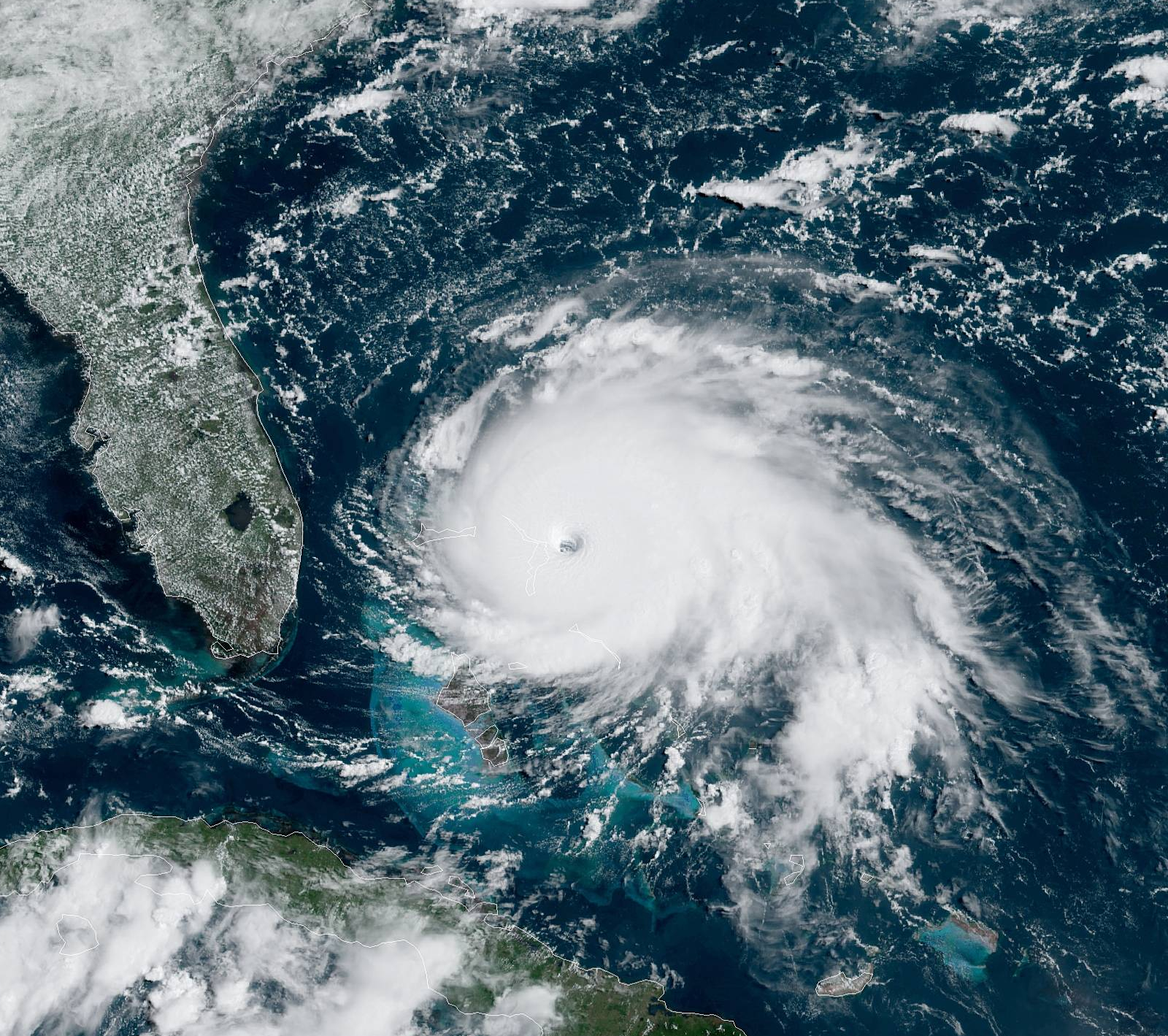
Last week, the world watched in horror as Hurricane Dorian ripped though the Atlantic, leaving devastation in its path, and as usual, debates online have swirled around the same question that arises every time there is a major weather event, “is this climate change?” Many people point to storms like Dorian as evidence of climate change and the very real dangers it poses, but others cry foul and insist that climatologists and science-advocates are being hypocritical and inconsistent. “Whenever we point to a blizzard or cold front as evidence that the climate isn’t changing,” they say, “you all accuse us of cherry picking and shout that ‘weather isn’t climate,’ but when there is a hurricane or a heatwave, suddenly you’re convinced it’s global warming.” This accusation of a double standard deserves some discussion, because there is a small kernel of truth to it, but, as usual (always?) there are key pieces that climate change contrarians are ignoring. So, let’s look at this for a few minutes.

Let’s start by dealing with the part that contrarians get right. If someone’s entire argument is, “it was hot today, therefore climate change is real” or “there was a big heatwave, hurricane, drought, etc., therefore climate change is real” then they are, in fact, conflating weather with climate. I will admit that this line of reasoning is no different than saying, “it was cold today, therefore climate change isn’t real.” However, and I can’t stress the importance of this enough, that is almost never what I see people doing. Rather, the argument usually points to a current weather event as the latest in a trend of changing weather patterns. This is a key distinction for several reasons.

First, we need to consider why it is problematic to conflate weather and climate. Weather is what happens over a short period of time, whereas climate refers to long term trends and patterns. Thus, an individual storm, cold front, etc. is weather, but a pattern of increasing storms, heatwaves, etc. over time is climate. So, when people use a storm like Dorian as an example of the latest event in a trend of changes, they aren’t conflating weather and climate, rather they are talking about climate. When we look at the trends, we see that the average intensity and the proportion of hurricanes/cyclones that are very powerful has increased over time, just as climate models predicted (see note 1: Emanuel 2005; Elsner et al. 2008; Holland and Bruyere 2014; Walsh et al. 2016). There is also a trend of hurricanes hitting further from the equator (Kossin et al. 2014), and a pattern of storms increasingly “stalling” (just as Dorian did; Kossin 2018; Hall and Kossin 2019; see note 2). So, it is completely valid to talk about a storm like Dorian in that context. By the same token, it is completely right and proper to bring up climate change when a heatwave occurs, because there are strong, decades-long trends of heatwaves increasing in frequency, duration, intensity, and the extent of area they affect (Klein Tank and Konnen 2003; Della-Marta et al. 2007; Russo et al. 2014; Tanarhte et al. 2015; Perkins et al. 2012; Habeeb et al. 2015). In contrast, saying “this part of the world experienced a record cold this week” and using that as evidence against climate change is using an isolated weather event, rather than a climate trend. There is no trend of increasingly cold winters. Rather, there is a global trend of increasingly warm temperatures. Indeed, as of the writing of this post (2019), all five of the five hottest years on record occurred in the past five years, and 18 of the 20 hottest years happened in the past 20 years (based in NASA’s data; the remaining two hottest years occurred in 1997 and 1998). There is a strong trend of increasing temperatures, which is why we are justified in bringing up climate change when we experience record-breaking temperatures (no, the warming hasn’t paused, that’s a myth).

This brings me to my second, and closely related, point: the nature of cherry picking. Cherry picking occurs when you isolate and cling to any pieces of evidence that conform to your beliefs while ignoring a (usually larger) body of evidence that disagrees with you. Hopefully from the paragraph above you can see where I am going with this. Citing a particular cold front, blizzard, etc. as evidence against climate change is, by definition, cherry picking, because it is using isolated events rather than trends, and it is ignoring the big picture of increasing global mean temperatures. Conversely, talking about heatwaves, hurricanes, etc. in the context of their trends is not cherry picking. It is literally the opposite of cherry picking because it is about trends and the big picture. On that note, I want to go down a brief side tangent to point out that using regional data to argue against climate change is also cherry picking. No one ever said that every part of the planet will be warmer all the time. Rather, we are talking about global patterns and global temperatures. Citing a few cherry-picked locations ignores that big picture.

By way of example, it would be crazy to isolate one person who smoked their whole life and never got cancer and say, “see, smoking doesn’t cause cancer because they smoked and are fine.” That would obviously be cherry picking, and it would be nuts because it would ignore the overarching picture of the strong trend of smoking increasing cancer risk. That is, however, exactly what climate change deniers are doing when they cherry pick a particular cold front, blizzard, ice sheet, etc.

Now, at this point, someone is inevitably thinking, “yeah, but you can never actually say that a particular cyclone, heatwave, etc. was caused by climate change, so it’s still deceptive to try to blame climate change when one happens.” My response to this is, again, two-fold. First, in many cases, we can actually use statistical techniques to show that certain weather events were so extraordinary that they were unlikely to have occurred naturally. For example, see the 2003 heatwave that caused over 70,000 deaths in Europe (Schar et al. 2004; Stott et al. 2004; Robine 2008). Similarly, studies showed that climate change very likely contributed to the extreme rainfall observed during Hurricane Harvey in 2017 (Risser and Wehner 2017; van Oldenborgh et al. 2017; Wang et al. 2018). There are many storms like this where we can, in fact, say with a high degree of confidence that climate change contributed to them (note: science never deals in 100% confidence).

The second consideration (again, related to the first), is that although we can never say with 100% certainty that a given event was caused by climate change, we can say that climate change is increasing them or their intensity, so we are justified in using them as examples of the dangers of climate change, and whether or not climate change caused any one particular storm is irrelevant, because we know the effect climate change is having in general.

Let’s go back to smoking as an example. Smoking causes cancer. This is well-established. However, that does not mean that everyone who smokes will get cancer, nor does it mean that everyone who gets lung cancer smoked. As a result, we can never say with 100% certainty that any particular case of cancer was caused by smoking, but that is really beside the point. The point is that there is a general trend of smoking increasing cancer risks. Thus there is a high probability that a smoker’s cancer was connected to their smoking, and it makes perfect sense to show people pictures of cancerous lungs and stories of people who suffered from lung cancer after a history of smoking. To put that another way, we can never point to an individual and say with 100% certainty that smoking caused their cancer, but we can point to them as an example in a general trend that we should take seriously. The same is true with climate change. Whether or not a particular storm was definitely caused by climate change is beside the point. The point is that climate change is making intense hurricanes more common, heatwaves more intense, frequent, and long, droughts more common in some areas while floods increase in others, etc. These are serious issues that need to be treated accordingly, and it is completely right and proper to talk about climate change when these extreme weather events occur.

Note 1: It is important to clarify that it is the average intensity and proportion of hurricanes/cyclones that are high intensity (e.g., category 4 and 5) that is increasing, not the total number of hurricanes/cyclones. This is consistent with model predictions.

 Note 2: There is a general pattern of increasing hurricane stalling, but there is some disagreement among scientists about the cause. Several models did predict a slowdown in hurricane transition speed due to climate change, but others predicted no change. So not all scientists agree that climate change is the cause (despite what many think, scientists love to argue and don’t automatically assume that everything is being caused by climate change). I personally think that the evidence more compelling suggests that climate change is the cause, but I will wait for more data before reaching a verdict, and I wanted to include this note since the evidence does not point to climate change as conclusively as it does on other issues (despite what many think, I really do care about accurately portraying evidence and the scientific literature).

Related posts

Literature cited

  • Della-Marta et al. 2007. Doubled length of Western European summer heatwaves since 1880. Atmospheres 112:D15103.
  • Elsner et al. 2008. The increasing intensity of the strongest tropical cyclones. Nature 455:92–95.
  • Emanuel 2005. Increasing destructiveness of tropical cyclones over the past 30 years. Nature 436:686–688.
  • Habeeb et al. 2015. Rising heatwave trends in large US cities. Natural Hazards 46:1651–1655.
  • Hall and Kossin 2019. Hurricane stalling along the North American coast and implications for rainfall. Climate and Atmospheric Science 2
  • Holland and Bruyere 2014. Recent intense hurricane response to global climate change. Climate Dynamics 42:617–627.
  • Kossin et al. 2014. The poleward migration of the location of tropical cyclone maximum intensity. Nature 509:349–352.
  • Kossin 2018. A global slowdown of tropical-cyclone translation speed. Nature Letters 558: 104-108.
  • Klein Tank and Konnen 2003. Trends in indices of daily temperature and precipitation extremes in Europe, 1946–99. Journal of Climate 16:3665­–3680.
  • Perkins et al. 2012. Increasing frequency, intensity and duration of observed global heatwaves and warm spells. Geophysical Research Letters 39:L20714.
  • Risser and Wehner 2017. Attributable Human‐Induced Changes in the Likelihood and Magnitude of the Observed Extreme Precipitation during Hurricane Harvey. Geophysical Research Letters 44:12457–12464.
  • Robine et al. 2008. Death toll exceeded 70,000 in Europe during the summer of 2003. Epidemiology 331:171–181.
  • Schar et al. 2004. The role of increasing temperature variability in European summer heatwaves. Nature 427:332–336.
  • Stott et al. 2004. Human contribution to the European heatwave of 2003. Nature 432:610–614.
  • Tanarhte et al. 2015. Heatwave characteristics in the eastern Mediterranean and middle East using extreme value theory. Climate Research 63:99–113.
  • van Oldenborgh et al. 2017. Attribution of extreme rainfall from Hurricane Harvey, August 2017. Environmental Research Letters 13:019501.
  • Walsh et al. 2016. Tropical cyclones and climate change. Climate Change 7:65–89.
  • Wang et al. 2018. Quantitative attribution of climate effects on Hurricane Harvey’s extreme rainfall in Texas. Environmental Research Letters 13:054014
Posted in Global Warming | Tagged | 1 Comment

Don’t cherry pick your experts

The appeal to authority fallacy is one of the most common logical fallacies in internet debates. It is a favorite tactic among climate change deniers, anti-vaccers, young earth creationists, and pretty much anyone else who rejects “mainstream” science. I previously wrote about this at length and explained when it is and is not a fallacy to appeal to authority, as well as discussing some of the different forms that the fallacy can take. In this post, however, I want to focus on one particular variant of the fallacy and explain why it is actually just a special case of cherry picking and is the result of strong cognitive dissonance and motivated reasoning. This variant occurs when you cite one particular expert as if they are infallible while ignoring a much larger body of experts who disagree with them.

As I have frequently said on this blog, no matter what crackpot proposition you believe, you can find someone, somewhere, with an advanced degree who thinks you’re right. That does not, however, automatically make you correct. Simply having an advanced degree doesn’t guarantee that someone knows what they’re talking about, nor does it make them infallible. On literally any scientific topic, you can find a handful of people who disagree with the rest of the scientific community, but blindly assuming that those people are right is problematic for a number of reasons. Most importantly, science is determined by evidence, not authority. We always need to look at the evidence that has been published in support of a position, rather than the list of names associated with it.

The second problem is a logical contradiction that is inherent to this variant of the fallacy. Namely, this argument implicitly assumes that someone must be correct just because they are a scientist, however, in so doing, it also implicitly assumes that thousands of other scientists are wrong despite the fact that they are scientists. Do you see the inherent problem here? It posits that having the support of a scientist is sufficient evidence that a position is correct, while simultaneously ignoring a much larger group of scientists that don’t support the position. This is why it is a special case of cherry-picking. This fallacy cherry-picks which people to trust based entirely on personal biases and ideology rather than actual expertise.

Let me use a few comments that were recently left on my Facebook page to illustrate. These came from climate change discussions, so before I discuss them, I want to be clear that the vast, vast majority of scientists agree that we are causing climate change, and there are very few climatologists who disagree. The exact number varies depending on which survey and methodology we’re talking about, but it is consistently in the high 90s (close to 100%; I talked about all of this in more detail here and here, and I discussed the fraudulent “Oregon petition” that purports to have signatures from thousands of scientists here). The point is that very few climatologists dispute the evidence, so using one of the handful of scientists who disagree as evidence is inherently cherry-picking.

To illustrate, let’s look at the comments. The first of these (orange above) was fairly mild and pointed out that Dr. Patrick J. Michaels disagrees with the consensus on climate change. The second took a more forceful approach by insisting we aren’t causing climate change because Dr. Richard Lindzen (the MIT professor) says we aren’t. Indeed, the commenter mocked the rest of us for saying that a 30-year MIT professor is wrong. According to this commenter, Lindzen’s academic status and experience must make him correct. If we stop and think about this for five seconds, however, it becomes obvious that the commenter was himself laughing at and trying to discredit literally thousands of professors from respected universities from all over the world. Thus, mocking everyone else for disagreeing with one professor makes no sense given that the commenter was disagreeing with thousands of professors. It is an inherently hypocritical and disingenuous argument. Similarly, the first commenter was focusing on the fact that Michaels disagrees with the consensus, while ignoring the fact that thousands of other scientists disagree with him. Do you see the point? If we are going to play this game of appealing to authority, then surely it makes more sense to trust the vast majority of experts rather than a handful of cherry-picked individuals. Or, to put this as a question, why should you place blind, unwavering faith in people like Lindzen, while totally ignoring the vast majority of experts who say he’s wrong?

The answer is simple: confirmation biases. People don’t cling to the words of people like Lindzen because he actually knows more than every other scientist. Rather, they follow him because he says what they want him to say. He gives confirmation to their pre-established views; therefore, they blindly trust him and use his degrees to give their position a false sense of credibility. Indeed, motivated reasoning is so powerful that most of these people don’t even realize the inherent logical contradiction in their views. They don’t see why it is inherently contradictory to say that one person must be right because of their degrees/experience while also saying that thousands of other people with the same degrees and experience are wrong.

There is also another issue here that is worth mentioning. In many cases, the handful of experts who disagree with a “mainstream” position have conflicts of interest or other issues that make them untrustworthy. To be clear, I’m not engaging in baseless speculation here. This is well-established. Case in point, Lindzen has been on the payroll of fossil fuel companies and interest groups for quite a while, including receiving $30,000 from Peabody Coal and $25,000 a year (starting in 2013) from the Cato Institute, a conservative think tank was started by one of the Koch brothers (this was revealed in 2018 court documents that you can read here). Patrick Michaels also has a lengthy string of connections with the Koch brothers, Cato Institute, etc. from which he has received hundreds of thousands of dollars. This type of situation is the norm for the handful of climatologists who deny anthropogenic climate change. Meanwhile, many climatologists struggle to adequately fund their research, and they make very little money. There are exceptions, of course, but most research comes from independent scientists (see note).

To be clear here, I’m not saying that people like Lindzen and Michaels are automatically wrong because of their conflicts of interest, but those conflicts do mean that we should scrutinize them more closely, and we certainly shouldn’t be placing blind faith in them and assuming that they are actually smarter than the entire rest of the scientific community. Further, when we apply that scrutiny, we find that they both have a long history of making false statements about climate change (examples for Lindzen; examples for Michaels). Nevertheless, the people who appeal to their authority generally have an inflated sense of their credibility (both comments I posted illustrate this).

So, which makes more sense, trusting a handful of scientists most of whom have enormous conflicts of interest, or trusting the vast majority of scientists, most of whom don’t have conflicts of interest? To put that another way, Occam’s razor states that solution that makes the fewest assumptions is usually the correct one, and there are clearly fewer assumptions involved in assuming that a handful of scientists are wrong as opposed to assuming that nearly the entire scientific community is wrong.

Before I end this post, I want to state again that I am not saying that climate change is true because of all the scientists who say it is true. Rather, we know that climate change is true because of the thousands of studies showing that it is happening, we are causing it, and it is dangerous. The consensus among scientists exists because of that consistent body of evidence. That’s how a consensus works in science. First a consistent body of evidence is accumulated, then that body of evidence results in a consensus among the scientists themselves. So, my point is not that we should blindly follow an expert consensus. Rather, my primary point is that we should not blindly follow cherry-picked experts, and my secondary point is that if we are going to appeal to authority rather than basing our views only on the evidence, the consensus among experts is nearly always based on a consensus of evidence, thus making it fairly reliable, and it makes far more sense to trust a view that is shared by the vast majority of experts, rather than blindly following a handful of dissenting voices.

In summary, arguing that a contrarian must be right because of their credentials is inherently logically contradictory, because that argument implicitly assumes that thousands of other scientists are wrong despite having the same credentials. Science is about evidence, not authority, but if we are going to appeal to authority, then surely it makes sense to trust the majority of experts, rather than a few fringe scientists. Finally, I want to make it clear that although I have focused on climate change for this post, the same thing happens on other topics, and it is just as flawed there. Anti-vaccers, for example, love to cite the handful of doctors and scientists who oppose vaccines as if they are infallible, but doing so is illogical and foolhardy. The fact that someone has an advanced degree does not automatically make them right.

Related posts

 Note: Governments are by far the biggest funding source for climate change research, with much of that money going to independent scientists working out of universities. Many people seem to think that receiving a grant from the government is a serious conflict of interest, which has always baffled me (particularly when talking about countries like the USA). Politicians have, historically, been very opposed to the concept of anthropogenic climate change, and in countries like the US it is still hardly a popular political position, and many administrations have refused to accept it or take it seriously. So why would anyone think that money originating from those governments is a conflict that would bias research towards showing that we are causing climate change? Why would a government that doesn’t acknowledge climate change want to fund research showing that we are causing it? You really don’t think that politicians would LOVE a study saying that we aren’t causing it? My point is simple, grants from the government are usually (and correctly) considered to be neutral sources of funding, rather than conflicts of interest, but if we wanted to say that they are biased, surely that bias would be in favor of the fossil fuel companies who spend billions lobbying politicians.

Posted in Global Warming, Rules of Logic | Tagged , , , , , , | 7 Comments

Windows into Science: Scientific Conferences

I am writing this on my way home from attending two scientific conferences. These meetings are critical components of the modern scientific enterprise, and they provide a lot of insights into how science works, so I thought it would be a good idea to briefly explain what they are, why they are valuable, and what they show us about modern science.

Before I go any further, I want to quickly mention that you don’t have to be a scientist to attend these meetings. Anyone is welcome to come. Most scientific organizations have annual conferences, so please find a scientific society that studies something you are interested in and attend one of their meetings. We’d love to have you participate in science with us.

Presenting current research

At the most fundamental level, scientific conferences are a place for scientists to present their current work to the rest of their community, and the bulk of the time at conferences is devoted to talk sessions (usually split into 15 minute slots, where each researcher has 12 minutes to present, ideally leaving three minutes for questions) and poster sessions (where researchers stand beside posters displaying their research and other scientists talk to them and ask questions). Generally (though not always), the research being presented at conferences is from recent or ongoing studies. Many talks include preliminary data or data from studies that aren’t fully completed. Thus, they are a good opportunity to showcase what a lab is doing right now and draw attention to research that hasn’t been published yet.

How many talks are given during a conference depends entirely on the size of the meeting. I’ve been to small conferences that have only a few dozen people, last one day, and have just a single session. These are usually for either regional scientific societies or a very narrow research focus (e.g., research on a single species). Others are huge, with thousands of presenters, several days of talks, and numerous sessions running simultaneously. These usually include researchers on a wider range of topics who come from all over the world to attend.

Regardless of the size and scope, conferences are a great place to draw attention to your current research and keep up with the current research that other labs are conducting. Science is not done in a vacuum, and as a scientist, you have to constantly stay abreast of the current research and update your knowledge as new studies come out. As a result, attending conferences is really important for active scientists.

Maintaining and creating collaborations

Although talks consume the most time at conferences, they aren’t actually the most important component or reason for attending. That honor goes to making and maintaining connections within your field. People often think about scientists as lone mavericks working in isolation, but that simply isn’t how modern science operates. Science is an immensely collaborative process, and the best studies usually involve numerous collaborators from all over the world, each of whom contributes different expertise and skills. So how do you build these collaborative teams? Talking to people at conferences is often the best bet.

This is really the most critical function of conferences. They bring together the majority of researchers in a particular field, thus facilitating collaborations and dialogue. If you take me up on my suggestion that you should attend a conference (which I hope you will), pay attention to the conversations that happen during breaks and over meals. Watch closely, and you will continuously see scientists bouncing ideas off each other, sharing proposals, giving advice, and planning new projects. Sometimes, this is entirely organic. For example, one researcher may see a proposal by another scientist who is doing research that is similar to their own and decide that they should collaborate on a joint project. This happened to me during one of the conferences I just attended. Another scientist presented on a disease ecology system that was similar to mine, and after hearing their talk, I invited them to join me for lunch to discuss a joint project comparing our systems.

In other cases, discussions and meetings may be pre-arranged. For example, two long-term collaborators who live on other sides of the planet will often use meetings as an opportunity to sit down together and discuss the next steps of their joint research.

Finally, meetings are a good place for students to find potential advisers. For example, MS students at conferences are often scouting for PhD advisers, and conferences give them the opportunity to both showcase their own research and talk to potential mentors.

Scientists love to argue

The final thing I want to talk about is a common misconception about science that conferences help to dispel. Many people seem to think that scientists go around constantly agreeing with each other and blindly following the “dogma” of their fields. Nothing could be further from the truth. Scientists are extremely argumentative and critical, and when we read papers or watch talks, we carefully evaluate the methods and results rather than blindly accepting them. Conferences are a great place to see this on display in real time.

Talks are generally followed by a question session, and it is extremely common for audience members (other scientists) to use that time to try to shoot holes in the presentation they just saw. On multiple occasions I have seen a presentation crash and burn during the question session, sometimes with the presenter being brought to tears as the problems with their research were brought to light.

That method of argumentation is, of course, the rude way to do things. The more polite way, which also happens frequently, is to talk to the present privately later in the conference, ask them additional questions, and point out potential problems they may have missed. Ideally, this exchange will benefit the presenter, because, given that conference presentations often include preliminary results, there may still be time to fix the project before it is too late.

Finally, in addition to directly talking to the presenter, scientists talk among themselves about the presentations. I have been to dozens of conferences, and at some point, during every single one of them, I have found myself sitting around with my colleagues dissecting talks, discussing their pros and cons, and talking about issues we had with the methods and/or data presentation. Pay attention at conferences and you will see this happening constantly.

This brings me to my closing point. If you are someone who questions the value and reliability of science, who ignores studies you don’t like, who thinks that scientists blindly agree with the “dogma” of their fields, who thinks that scientists are engaged in some form of conspiracy, etc. then I strongly encourage you to attend some conferences. Meet scientists. Talk to them. Observe how they think and process information. Listen to the questions that they ask and watch how they respond to talks. Scientists don’t absorb information passively. Rather, we actively consume it and engage with it, and seeing that process in action will change how you view science and scientists.

Posted in Nature of Science | Tagged | 6 Comments